Tuesday, March 07, 2006

Iraq - Possible UK pullout by 2008


Norman Kember in a new video broadcast Tuesday

In a report published in the Daily Telegraph in the UK a withdrawal plan for British troops is be implemented in Iraq by 2008. This is in contrast to a recent commitment by the British government to send more troops to Afghanistan. The withdrawal would occur only if the situation in Iraq remained stable and the violence diminished significantly. The first movements could come within weeks, said Lt Gen Nick Houghton. Although Gen Houghton said the withdrawal was prompted by confidence that Iraq's 225,000 soldiers and police officers could soon maintain order without assistance, the news was seen by hard-line Shia and Sunni groups as a victory for their resistance to the "occupiers", the Daily Telegraph reported on Tuesday. Khalil Ibrahim, a leading member of the Sunni Iraqi Islamic Party, said it was good that foreign troops were leaving voluntarily before they were "forced to". And a Baghdad spokesman of Moqtada al-Sadr, the militant Shi’ite cleric, said their departure was "our aim and our goal".

But Lt Gen Nick Houghton’s optimism was not shared by all. US Ambassador Zalmay Khalizad told the LA Times that Pandora’s box had already been opened in Iraq. He said the "potential is there" for sectarian violence to become a full-blown civil war. "We have opened the Pandora's box and the question is, what is the way forward?" Khalilzad said. "The way forward, in my view, is an effort to build bridges across [Iraq's] communities." His comments were in direct contrast to other top officials within the US military. On Sunday, Marine Gen. Peter Pace, chairman of the Joint Chiefs of Staff, said in a televised interview that things in Iraq were "going very, very well, from everything you look at." Many observers may well be of the opinion that his view is overly optimistic as the violence and attacks continue almost daily.
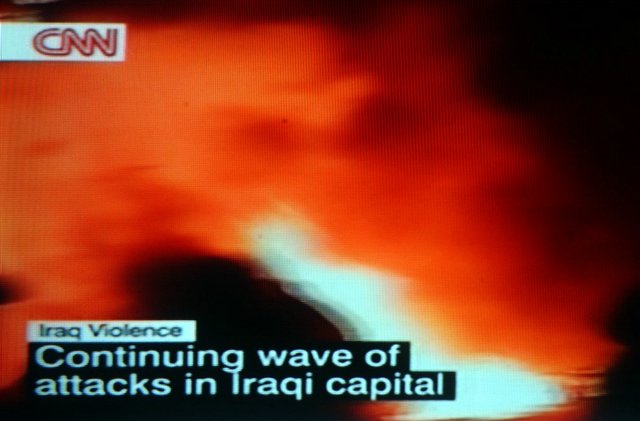
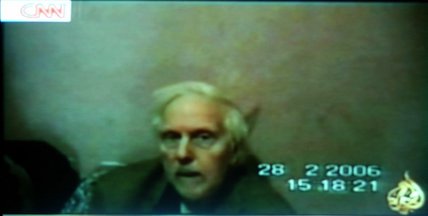
Uncertainty also remains for the safety of those held by insurgent groups in Iraq. But for one group of hostages there was a new video of kidnapped peace activist Norman Kember was shown on Al-Jazeera today, bringing with it fresh hopes that he might be released. David Cockburn, a spokesman for the Christian Peacemakers Team, said he was “hopeful” of a positive outcome, adding that there was a “Huge amount of work [being done] behind the scenes”. But there were concerns for the safety for one of the kidnapped activists as the video failed to show the American citizen, Tom Fox [CNN] . The video comes two days after a vigil calling for their release by supporters in London’s Trafalgar Square. The activists have been held by the Swords of Righteousness group since November 2005. Bomb attacks targeted at least three cities in Iraq on Monday killing at least 10 according to CNN. In Baghdad a US military convoy was targeted and a top Iraqi general was killed in a separate ambush. Maj. Gen. Mubdar Hatim was the commander of the Iraqi army's 6th Division, and was shot by insurgents in the Khadamiya district of Baghdad. Several civilians were said to have been injured. And in Baquba and Hilla, car bombs exploded injuring 53 people and killing at least 6. A U.S. soldier was killed Sunday in Iraq's Anbar province, west of Baghdad, the military said. According to the military, the soldier "died due to enemy action" in the province. Since the start of the war in 2003, 2,302 U.S. troops have died in Iraq. Posted by Picasa

Breaking News - at least 4 dead in India blasts


Two explosions have occurred in north-east India. The blasts hit a Hindu Temple and a railway station in Varanasi at around 13:00 GMT [18:00 local time]. Local reports suggest at least 12 dead, CNN only confirmed four killed in the possible act of terrorism. Posted by Picasa

Sunday, March 05, 2006

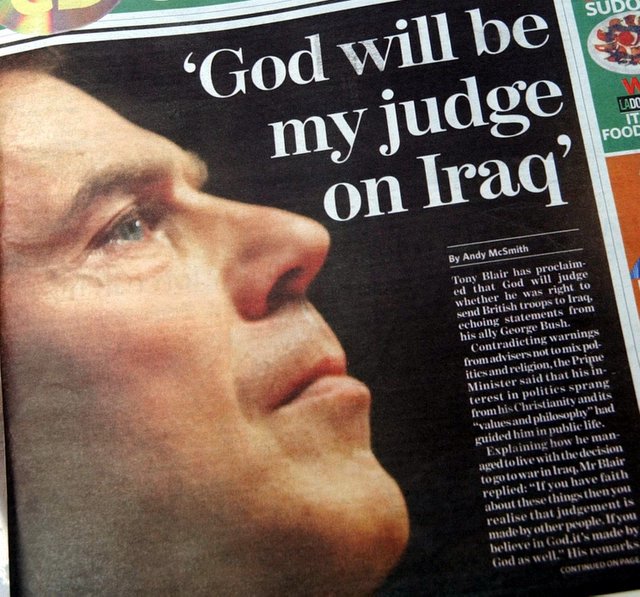
Blair - "God will be my judge"


Tony Blair has proclaimed that God will judge whether he was right to send British troops to Iraq, echoing statements from his ally George Bush. Explaining how he managed to live with the decision to go to war in Iraq, Mr Blair told Michael Parkinson, a British television chat-show host, "If you have faith about these things then you realise that judgement is made by other people. If you believe in God, it's made by God as well." His remarks, made in an interview to be shown on ITV's Parkinson show tonight, invite comparison with President Bush, a born-again Christian, who has made a virtue of bringing religion into politics. But they also carry the risk of inflaming opinion in the Arab world, where the term "crusader" is commonly used to condemn Christian leaders who meddle in the Middle East. Mr Bush once told Palestinian leaders: "God would tell me, 'George, go end the tyranny in Iraq' and I did." There have been persistent reports that Mr Blair joined the President in prayer for God's guidance at his ranch in Crawford, Texas, in 2002, at the summit at which many people believe a secret decision was reached to invade Iraq. The claims have been made in a book by the Christian author Stephen Mansfield, who said he had heard it from White House officials. It was clarified by Time magazine correspondent, David Aikman. Blair’s statement echoed around the world creating much public debate on domestic radio stations as well as commentary in print media [BBC]. CNN covered the story but most of the sensationalist headlines were reserved for Britain’s ever voracious media. The rhetoric is nothing new. In statements made many times by al-Qaeda leaders such as Zawahiri and Bin Laden, there are often references to Allah [God], many asking for divine help; the phrase “god willing” often ending threats made against the west. Reg Keys, the father of one of six military policemen killed in June 2003, said the Prime Minister's words were "abhorrent". And even before the interview was broadcast on British television another al Qaeda tape surfaced. In a video broadcast on Saturday, Ayman al Zawahiri condemned cartoons said to insult the Prophet Mohammed. The cartoons were published throughout European newspapers and shown on TV reports. The al Qaeda deputy blamed freedom of speech for "the insult against the Prophet Mohammed," according to a CNN translation. In the tape he described the cartoons as a “crusader’s war on Islam”.
And in the War on Iraq the body pile continued to grow. In Baghdad, at least 3 were killed in a gun battle and 7 injured according to a report on Sky News. The attack targeted a Sunni mosque in further violence in Iraq on Sunday. Meanwhile in London, around 100 people called for the release of Norman Kember who has now been in captivity for 100 days. Kember was part of a group of peace activists who were kidnapped by insurgents in western Baghdad on Saturday 26th November last year. The others held are Tom Fox, 54, of Clear Brook, Virginia, USA, James Loney, 41, of Toronto, Canada, and Harmeet Singh Sooden, 32 of Toronto, Canada. All were part of Chicago based Christian Peacemakers Team.
In the continuing War on Terror Iran is once again in the spotlight. The country has made clear once again that it will continue to pursue its nuclear policy and enrich Uranium. The ultimatum was made clear that enrichment would continue if the issue was referred to the UN Security Council by the IAEA [CNN]. Iran has insisted that its nuclear programme is merely to augment a domestic demand for electricity. It would also free up its vast oil reserves for export. Iran is estimated to have the fourth largest in the world. Thousands have protested in Tehran to support the government in its stance. The BBC described the ‘proud defiance’ of the ruling party, led by Mahmoud Ahmedinejad, had gelled the people together in a show of patriotism. Posted by Picasa

Wednesday, March 01, 2006

H5N1 - Cat death increases fears of bird-flu


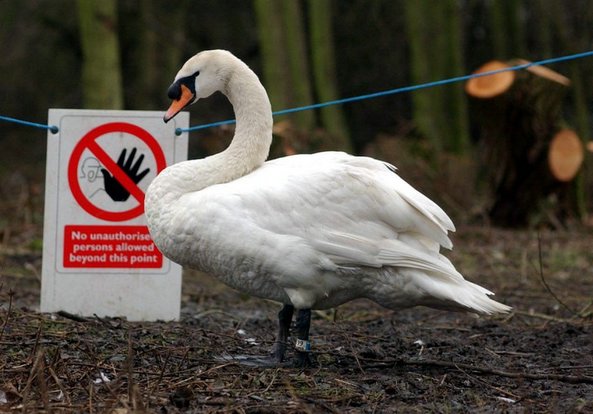
Further risks in the spread of the H5N1 virus were highlighted yesterday after it was confirmed that a domestic cat had died in Germany from the lethal virus. The cat which is believed to have come into contact with some swans was found dead on the Baltic island of Reugen at the weekend [BBC]. The development has prompted French ministers to warn pet owners not to allow their cats near areas where H5N1 had been reported [BBC]. But the jump to mammals, though rare, is only increasing the fear that a pandemic is closer than ever before. And the fear amongst consumers is also affecting the poultry trade. In the UK where there has yet to be any reported cases of the H5N1 virus in wild birds or amongst poultry, sales of chicken products has dropped sharply. One farmer in Essex said that his sales had dropped 70% from levels six months ago. “Because of scaremongering, media hype and the way things have gone…the whole industry has seen sales plummet,” said Ian Chisolm, a poultry farmer for eight years [Yellow Advertiser / BBC]. The facts are clear however. If the H5N1 virus should jump the species barrier to humans, the risk of a global pandemic is likely. Until then the spread of the virus amongst the global bird population will only increase the risk of that occurring. The annual flu (also called "seasonal flu" or "human flu") kills an estimated 36,000 people in the United States each year. The annual flu vaccine is made by combining vaccines for the new versions of H1N1 and H3N2 viruses that nature produces each year. The dominant strain of annual flu in January 2006 is H3N2. Measured resistance to the standard antiviral drugs amantadine and rimantadine in H3N2 has increased from 1% in 1994 to 12% in 2003 to 91% in 2005 "Contemporary human H3N2 influenza viruses are now endemic in pigs in southern China and can reassort with avian H5N1 viruses in this intermediate host." The Hong Kong Flu was a pandemic outbreak of influenza that began in Hong Kong in 1968 and spread to the United States of America that year. The outbreak ended the following year, in 1969.
The Hong Kong flu was the A type of influenza, specifically the first known outbreak of the H3N2 strain (a notation that refers to the configuration of the hemagglutinin and neuraminidase proteins in the virus).
Because of its similarity to the 1957 Asian Flu (which was the H2N2 strain, differing from the Hong Kong flu only in the chemical arrangement of the hemagglutinin protein as a result of antigenic shift) and possibly the subsequent accumulation of related antibodies in the affected population, the Hong Kong flu resulted in much fewer casualties than most pandemics. Casualty estimates vary: between 750,000 and two million people died of the virus worldwide (34,000 people in the United States) during the two years (1968-1969) that it was active. It was therefore the least lethal pandemic in the 20th century. The worst pandemic seen was after the Great War or WW I, and killed millions. The "Spanish flu", 1918-1919, first identified early March 1918 in US troops training at Camp Funstan, Kansas, by October 1918 it had spread to become a world-wide pandemic on all continents. Unusually deadly and virulent, it ended nearly as quickly as it began, vanishing completely within 18 months. In six months, 25 million were dead; some estimates put the total of those killed worldwide at over twice that number. An estimated 17 million died in India, 500,000 in the United States and 200,000 in the UK. The virus was recently reconstructed by scientists at the CDC studying remains preserved by the Alaskan permafrost. They identified it as a type of H1N1 virus. The future of the H5N1 virus is far from certain but the potential risk is very clear. Posted by Picasa

Iraq - Death tolls increase in continuing violence


Besides efforts by the Iraqi government to stamp out the upsurge in violence following the attack on the holy mosque in Samarra, the attacks have only increased. On Friday there was a brief calm throughout Baghdad. A curfew which was imposed at the weekend also reduced the death toll briefly. But even before the curfew was lifted dozens of Iraqis, both Shia and Sunni, were dying in renewed attacks [BBC]. On Sunday, 30 people died in total, 15 in a mortar assault on a Shia area of Baghdad and another 15 across the rest of Iraq, including three US soldiers [BBC].And the attacks continued into Monday and Tuesday. According to the Iraqi authorities at least 379 Iraqis have been killed since the attack on the al-Askari shrine and holy mosque, and more than 450 injured [BBC]. The government has denied reports by the Washington Post, quoting a source from a Baghdad morgue, that 1,300 had died since February 22nd. Other casualties in the continuing violence are coalition soldiers. On Monday two British soldiers died in a roadside bomb attack in Amara [BBC] increasing the total coalition dead to 2,503 [Casualty List]. The number of Iraqi dead is incalculable, but it is likely to run into many thousands. The violence, attacks, shootings, bombings and kidnappings seems set to continue for many years to come and there are fears that other factions may spread the violence into a wider conflict encompassing the whole of the Middle-East .The trial of Saddam Hussein resumed Tuesday after a two week adjournment. It is not clear where this trial is heading, nor when it might conclude. The trial has been adjourned until March 15th. And reporting on the whole bloody mess of what is left of Iraq is becoming all the more difficult as journalists are becoming a greater target by insurgents. Three Arab journalist died in the recent violence and more than 60 have died since the conflict began, 21 of them Iraqi.Meanwhile President George W Bush reinforced his stance in the War on Terror as he made a surprise visit to Afghanistan and made clear his determination to continue the fight. It was the President’s first visit to the country since it was invaded in November 2001 [CNN] Posted by Picasa

Monday, February 27, 2006

Taiwan - China rebuffed in independence bid


Chen Shi Bian - raising alarm
Taiwan has cuts links with China in renewed tension after President Chen Shui Bian suspended the National Unification Council. Politics is said to be the main reason behind the move. His pro-independence stance may be intended to boost his popularity with the electorate. But in a speech Chen said, “We are trying to defend human rights in Taiwan”. The move puts President Bush in a difficult position after America’s resolve to support Taiwan. In a speech in Kyoto, Japan last year George Bush reiterated his long standing support for an independent Taiwan and urged China to follow a greater move towards democracy. In an article published in the New York Times on November 22nd 2005, the US stance was greeted with caution. “President George Bush fanned the flames of the longstanding conflict between China and Taiwan during his November 16 speech in Kyoto, at the start of a week-long state visit to Asia. In urging China to expand openness and allow its people more freedoms, the president used Taiwan as a model, saying Taiwan had brought prosperity to its people by embracing freedom and creating a democratic Chinese society.”

Although the President had iterated that there should be “no unilateral attempts to change the status by either side,” he insisted that “the United States will continue to stress the need for dialogue between China and Taiwan that leads to a peaceful resolution of their differences”. But China is unlikely to be influenced by all the rhetoric. Following The US President’s speech in Japan, China’s Foreign Minister Li Zhaoxing told reporters at the Asia-Pacific Economic Cooperation (APEC), "Taiwan is an inseparable part of China, and China does not brook any interference in its internal affairs”. Today’s move by President Chen will certainly complicate relations between China and the US as well as increase tensions with Taiwan, but as to whether the political posturing will lead to military conflict – only time will tell [reports - News/CNNPosted by Picasa

Friday, February 24, 2006

War on Terror - failed terror attack on Saudi refinery


Saudi Arabian security forces have said they have foiled a suicide attack on an oil refinery near Abqaiq. Cars were stopped near the perimeter of the installation and engaged by security guards. All 10 terrorists are said to have been killed during an exchange of gunfire along with three guards at the biggest oil installation in the country. Oil prices spiked following the news with prices rising by $2.11 per barrel to $62.65. [BBC]

Meanwhile the streets are calm in Baghdad after Thursday’s violent repercussions following the bombing of a Shi’ite mosque. But tension remains high throughout the country. Posted by Picasa

Thursday, February 23, 2006

Iraq - Mosque attack may precipitate civil war


The Samarra Mosque - Before and after the bomb attack
Iraq is on the precipice of civil war after a week of attacks on Shi’ites culminated in the destruction of one of the world’s holiest mosques. The mosque in Samarra, which has stood on the site for nearly 1000 years, was virtually destroyed by the explosion by unknown attackers. The mosque has been rebuilt several times throughout its history with the gold dome added in 1905 [BBC].

More than 100 have died throughout Iraq since Wednesday [BBC]. Three journalists working for Al Arabiya TV were kidnapped and later found killed. Al-Jazeera had extensive reports of one woman who had previously worked for their organisation. More journalists have died in Iraq than the whole of the Vietnam war. More than 100 Sunni sites have been attacked including at least 50 mosques and reprisal attacks are certain to worsen as radical clerics such as Moqtada al Sadr make a call to arms. Authorities have pointed the finger of blame for the attack on the mosque firmly at al Qaeda and Zarqawi, though as yet there has been no claim of responsibility. Indeed the bewilderment and shock of the bombing has precipitated anger towards the US. The shocking images beamed around the world by al-Jazeera, CNN and other networks have certainly incensed many Muslims and there have been renewed anti-US protests in Pakistan and elsewhere. Al-Jazeera’s lunchtime bulletin spent a great deal of airtime talking to prominent clerics discussing the deteriorating situation in Iraq. The story remained the top story on CNN but other broadcasters in the UK dealt with the story less prominently. Sky and BBC News 24’s top story was instead the theft of £45 million from a warehouse in Tonbridge, Kent [Sky News / BBC] and a roof collapse in Moscow which has killed at least 40 [BBC and injured more than 30.

The attack on the mosque comes in a week of continued violence in the country. On Monday at least 17 people were killed throughout Iraq including attacks in Mosul and Baghdad. On Tuesday more than 20 were killed in a car bomb explosion in a Baghdad market place, and more than 30 were injured. Condemnation of the attacks has come from all sides. Jack Straw, who has been in Iraq since Monday, and Condoleezza Rice both condemned the attacks as did the new President of Iraq, Jalal Talabani, who said the attack was “a major conspiracy that is targeting Iraq’s unity”. Posted by Picasa

Monday, February 20, 2006

China - US internet companies under spotlight in censorship row


China’s continued restrictions on internet use has spilled over into political ramifications in recent weeks. With Google recently joining the ever growing internet market in China, the US has forced Chief Executives to explain their bowing to restrictive practices and censorship that have been placed on the companies [Seattle Times]. In the past year Yahoo has been guilty of providing Chinese authorities with names of journalists – both were jailed for ‘subversive activity’. Even the online encyclopaedia Wikipedia has been blocked since October 2005. An article in the Washington Post stated that in December, a message appeared on a Wikipedia page alleging the site had been "conducting anti-China activities under the flag of being neutral" and accusing its senior users of being "running dogs for American imperialism." Some suspected the note was posted by a government agent. This is an ongoing debate which is unlikely to be resolved any time soon. China has a long history of censorship going back many centuries. The first Emperor Qin Shi Huang ordered the burning of books in order to stem the free flow of ideas and maintain his powerbase. Two thousand years on, information flow is once a major issue for China’s leaders. It is a balance between free-trade and free-speech, and many companies are taking a pragmatic approach as well as a practical one. China maintain that their attitude to the internet was positive [Xinhua]. But Liu Zhengrong, deputy director general of Internet Affairs Bureau of the State Council Information Office, speaking to the Press on 14th of February in Beijing, said, “China regulates the Internet according to law and has accordingly enacted relevant rules and regulations.” Posted by Picasa

UK - Breaking News - Dead swans free of H5N1


Several dead swans found in the UK and tested by DEFRA have been declared free of the H5N1 virus, Sky News has reported. Tests were being carried out on dead birds found in Bury St Edmonds, Winchester, Preston, Shrewsbury, Thirsk and Hertfordshire, but all tests proved negative. Posted by Picasa

H5N1 - Bird-flu close to Britain's shores


H5N1 - Dead swans are being tested in UK
Bird-flu is moving closer to Britain with outbreaks of the deadly virus now having been confirmed in 12 European countries. Cases of H5N1 have so far been identified in Turkey, Romania, Greece, Croatia, Ukraine, Cyprus, Italy, Bulgaria, Austria, Germany, Slovenia and France. But there are worries that the UK authorities may not be able to cope with an outbreak in Britain. In 2001 thousands of animals were culled to prevent the spread of Foot & Mouth disease which devastated Britain’s meat industry. And an outbreak of bird-flu is likely to further affect the economy as consumer shy away from chicken products. According to Sky News the virus may have already arrived after nine dead swans were found in a number of counties across Britain. Tests were being carried out on dead birds found in Bury St Edmonds, Winchester, Preston, Shrewsbury, Thirsk and Hertfordshire. Posted by Picasa

Police may face prosecution over Menezes shooting


Dead - Menezes shot by armed police
Police officers involved in the shooting of an innocent civilian in July 2005 may face charges of perverting the course of justice. The Independent on Sunday newspaper in the UK carried the story on its front page and was later picked up by Xinhua
news and the Daily Telegraph. But the report into the shooting is likely to take months according to the Telegraph, which went on to say that investigators had already found alleged evidence of “blatant and clumsy attempts” to change a log entry after the shooting of the Brazilian electrician. Jean Charles de Menezes was shot in the head at least 7 times by armed police at Stockwell underground station on 22nd July after surveillance officers mistakenly identified him as Hussein Osman, a suspected suicide bomber. Osman had been wanted in connection with the failed attacks on London’s transport system the previous day. He was later located in Italy and extradited to Britain.
The Independent Police Complaints Commission (IPCC) report reveals that a log was changed so that it read: "And it was not Osman" instead of "it was Osman". This meant that surveillance officers could claim the marksmen had shot dead the wrong man despite having been warned that he was not who they had thought. Posted by Picasa

Saturday, February 18, 2006

Cartoon protests escalate


London - Thousands gather to protest
As temperatures are raised over the publication of a number of cartoons depicting the Prophet Mohammed, protests have escalated. In Libya at least 10 have died in riots and in Pakistan protest descended into violence for the fifth day in a row. In Nigeria, the latest to see protests, 16 died in violent protests [BBC]. In London a few thousand Muslims gathered in Trafalgar Square to protest their grievances over the cartoons. The assembled crowds were relatively peaceful, though noisy. Speakers gave long speeches mainly in Arabic as protesters waved placards declaring the “War on Terror” as being a “War on Islam”. Most of the placards had been vetted beforehand in order to avoid a repletion of events seen in London two weeks ago. In earlier protests placards had called for ‘Revenge’ and the ‘beheading’ of those who insulted Islam. In one small incident stewards moved in to ask two protesters who had fashioned a banner depicting a Danish flag emblazoned with the words “Stick to making pastries”. Denmark was the first country to see the publication of the offending cartoons [BBC/Sky News]. In Italy there was political fallout after one politician wore a T-shirt displaying some of the cartoons. Robert Calderoli, the Italian reform minister, was later forced to resign [BBCPosted by Picasa

Wednesday, February 15, 2006

Bird-flu worries increase after more outbreaks


Nigeria and Niger are the latest countries to be identified as being host to the deadly virus. And Iran has also seen outbreaks with 175 swans having been identified with the H5N1 virus. Germany is also on alert after two swans were identified there with the virus. H5N1 has been identified in many European countries. Cases of the H5N1 virus have been seen in Slovenia, Croatia, Romania, Bulgaria, Cyprus and Turkey in recent weeks. But after a lull in reported cases there were at least two reported cases found in Greece and Italy last weekend. [CNN]. There have even been cases reported in Iraq. At least one girl has died from the H5N1 virus according to CNN, and there are further cases in Fallujah and Ramadi. The New York Times also reported that a 25 year old fisherman may have died as a result of the H5N1 virus. So far, almost all humans infected with the virus have caught it from birds, but international health organizations are deeply concerned about the possibility that the strain will mutate to allow widespread human-to-human transmission. Posted by Picasa

War on Terror - more abuse pictures likely to further enflame Muslims


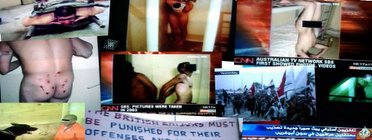
Some of the Abu Ghraib abuse shown on TV networks worldwide
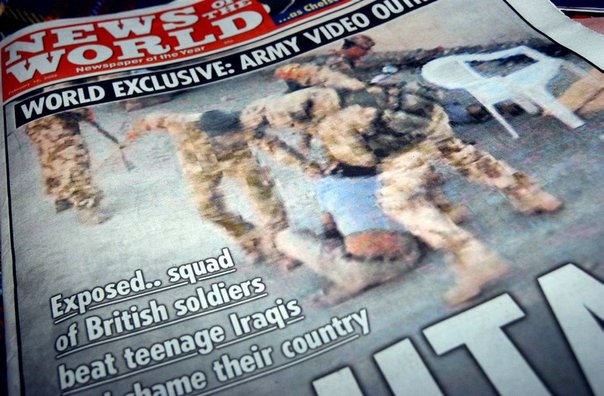
Latest developments in the War on Terror have included new anti-terror laws, riots and the release of shocking images of abuse by coalition troops. Sky News and BBC News 24 both broke with the story of prisoner abuse early Wednesday afternoon. The new images that “they didn’t want you to see” were earlier aired on an Australian TV station. SBS showed the image as part of a documentary about the abuse of Abu-Ghraib prisoners by US troops. Some of the un-shown images are said to show homicide and sexual acts. Channel 4 News described the pictures as being “disturbing” and “depraved”. Many were described as too extreme to show. The release of the pictures under America’s Freedom of Information Act will further outrage top officials at the White House who have attempted to stop the photos getting into the public arena. The timing is also of great concern. Earlier in the week the British paper News of the World showed video evidence of abuse by British troops. Indeed, some Arab TV stations linked both the Abu Ghraib ‘torture’ and the beating of teenagers in Basra by British soldiers. Charles Grainer and Lynndie England have already been sentenced in the US for their part in Abu Ghraib abuse previously investigated. But these new picture will only further enflame tensions throughout the Middle-East. One Civil Rights attorney described the evidence of abuse was only “skimming the surface”.
And as protests over the cartoons of Mohammed continue this will surely add fuel to the fire. Over 70,000 protested in Pakistan on Wednesday, the third such protest in recent days which has seen at least 3 deaths.

New Anti-Terror Laws were today passed in the UK parliament. The laws were “absolutely vital” to stopping the ‘glorification of terrorism’. The word ‘glorification’ sent “a massive signal” to the “likes of Abu Hamza”, Tony Blair told the House of Commons. But the glorification of terrorism may run into problems in the courts. As to what the precise meaning of glorification might mean. Some MPs have expressed a fear that those who celebrated the likes of Robin Hood, Wat Tyler or Che Guevara, might themselves find themselves on the wrong side of the law. But in an interview shown on Sky News at 17:25 GMT, the Prime Minister defended the change in the law. “It’s not just those who perpetrate terrorism [who present a danger] but also those that encourage such acts…or set out to entice or recruit other people”, Tony Blair said.
He insisted the War on Terror was a new threat which Britain and the rest of the world faced and that something needed to be done. “The law will allow us to take more action against such people…we have free speech in this country but don’t abuse it. We must send a clear signal to those that incite terrorism or glorify it”, he said. “This global terrorism threat is new, it’s different”. Referring to protests seen in London following the publication of cartoons of Mohammed he said, “I don’t think there is any doubt that most people in the country think it its abhorrent for people to hold up placards as we saw recently.” Some of the placards had called for those who insulted Islam be killed. One child had been photographed wearing an “I love al-Qaeda” woolly hat, another dressed as a ‘suicide bomber’.

Meanwhile in Iraq, at least 10 have died in continued violence including 3 children killed in a roadside bomb in Baghdad [BBC]. And as the Saddam Hussein trial was adjourned after only 2 days of testimony, it has emerged that Saddam Hussein and a number of his co-defendants have embarked on a hunger strike [BBC]. Posted by Picasa

Monday, February 13, 2006

Bird-flu - cases increase


Italian newspapers cover the story
Bird flu is beginning to spread with new cases identified in many European countries. Cases of the H5N1 virus have been seen in Slovenia, Croatia, Romania, Bulgaria, Cyprus and Turkey in recent weeks. But after a lull in reported cases there were at least two reported cases found in Greece and Italy this weekend [CNN]. There have even been cases reported in Iraq. At least one girl has died from the H5N1 virus according to CNN, and there are further cases in Fallujah and Ramadi. The New York Times also reported that a 25 year old fisherman may have died as a result of the H5N1 virus. So far, almost all humans infected with the virus have caught it from birds, but international health organizations are deeply concerned about the possibility that the strain will mutate to allow widespread human-to-human transmission. Posted by Picasa

Iraq - abuse claims


It has been a relatively quiet weekend in Iraq with few reports coming froming out of the country. A new leader was finally chosen after the recent elections. The United Iraqi Alliance party leader Ibrahim Al-Jaafari has now been nominated as the new Prime Minister of Iraq.

The Saddam Hussein trial resumed Monday and as the former leader entered the court he shouted, “Down with America, long live Iraq.” The defiant Saddam who had been forced to attend the session spent several minutes berating the judge and America. The court heard from two witnesses throughout the morning. Broadcast of the trial is delayed by 20 minutes. The defence team has now been appointed by the judge after the

The main issue dominating headlines is the release of a tape showing British troops abusing Iraqi prisoners. The tape, believed to have been shot in 2004, was widely reported after the News of the World.co.uk/ led with the story on Sunday. The story was extensively shown on many news stations including Sky News, BBC 24 and CNN. The video was also shown in Iraq on Al-Arabiya where it caused further outrage amongst Iraqis. The MoD described the images as “disturbing” and said the tape would be investigated. Tony Blair said he was also concerned over the allegations of abuse but added that the video should not reflect on the majority of British troops who were doing a good job. Posted by Picasa

Friday, February 10, 2006

War on Terror - 2002 LA terror plot foiled but death toll rises in Iraq


Violence continues in Iraq today with at least 11 killed in a car bomb attack in southern Baghdad [Reuters]. Another 38 people were injured. Meanwhile in Fallujah two US marines were killed by a roadside bomb on Thursday bringing the US death toll to 2,263. An Imam was kidnapped yesterday [CNN] adding to the growing list of hostages held by insurgents. Armed men dressed in Iraqi Army uniforms stormed the home of the imam, Sunni Sheikh Adel Khalil Daoud Hassan Al Azzaawi of the Al Nouaimi Mosque in central Baghdad's Karrade neighbourhood. No demands have yet been issued by the kidnappers.
George W Bush has defended his continuing War on Terror and yesterday outlined how the US had foiled a terror plot which had targeted Los Angeles [CNN]. The plot was allegedly set in motion by Khalid Shaikh Mohammed, the alleged mastermind of the September 11, 2001, attacks, a month after the airplanes crashed into the World Trade Center and Pentagon, Bush said. It involved terrorists from al Qaeda's Southeast Asia wing, Jemaah Islamiyah. Khalid Shaikh Mohammed is currently in US custody since his arrest by Pakistani authorities in 2003. Jemaah Islamiyah is believed responsible for attacks in Bali in 2005 which killed 129 people from more than 7 nationalities. Posted by Picasa

Iraq - New kidnap video of Jill Carroll released


Jill Carroll, the American journalist kidnapped by insurgents in Iraq, has resurfaced on a new videotape shown Thursday on a Kuwaiti TV station. In the short recording she said, "I'm here. I'm fine. Please, just do whatever they want. Give them whatever they want as quickly as possible. There is very short time. Please do it fast". Both CNN and Fox News showed part of the video early Friday. Posted by Picasa

Tuesday, February 07, 2006

Radical cleric sentenced to 7 years


Abu Hamza has been convicted on several charges at the Old Bailey including incitement to murder. The judge said it was “perfectly plain” that Hamza’s speeches were “going beyond the people he spoke to directly”. He then sentenced the radical cleric to 7 years [Sky News]. His British citizenship may be withdrawn and he still may face extradition to the US on terror related charges. Meanwhile in the US one of those allegedly converted to radical Islam by Abu Hamza awaits his sentence. Zacarius Moussaoui, the so called 19th hijacker in the events of September 11th 2001, now faces life imprisonment for his part [CNNPosted by Picasa

Monday, February 06, 2006

Trouble flares over Mohammed cartoons


The row over the printing of a number of cartoons depicting the prophet Muhammed has spilled over into violence. In several countries around the world Danish flags have been burned and in Beirut in Lebanon and in Damascus in Syria the Danish embassies were attacked and torched by protesters [BBC. The row has already created financial problems for Denmark with several Danish companies now being boycotted in a number of Middle-Eastern countries. In Jordan, two editors, sacked after publishing some of the cartoons, have now been arrested. In Jordan, the Arabic weekly Shihan ran three of the 12 cartoons, including the one that depicts Muhammed as wearing a turban shaped like a bomb with a burning fuse. The headline read: “This is how the Danish newspaper portrayed Prophet Muhammad, may God’s blessing and peace be upon him.” The paper said it was reprinting them to show readers “the extent of the Danish offence". The drawings first appeared in a Danish paper, Jyllands-Posten, in September. They have now been reprinted in a Norwegian magazine, in January, and in newspapers in France, Germany, Italy, Spain, and New Zealand. Some leaders have apologized to Muslims and editorials have also tried to explain their actions over reprinting the cartoons. On the Jyllands-Posten Jyllands-Posten website a notice has been posted – “Open letter to Fellow Muslim citizens - please read”. Part of the message reads, “In our opinion, the 12 drawings were sober. They were not intended to be offensive, nor were they at variance with Danish law, but they have indisputably offended many Muslims for which we apologize.” The statement went on to say that “because of culturally based misunderstandings, the initiative to publish the 12 drawings has been interpreted as a campaign against Muslims in Denmark and the rest of the world.” In the name of press freedom, more European newspapers ran the controversial cartoons. The Belgian newspaper De Standaard reproduced the pictures along with letters from readers in favour of publication.
Two New Zealand newspapers, the Dominion-Post in Wellington and The Press in Christchurch - both owned by Australia's Fairfax group - also published the cartoons in defence of freedom of speech.
Rupert Murdoch's flagship newspaper, The Australian, did not publish them, but strongly defended the right of newspapers to do so, saying in an editorial: "Liberal democracies must not give way to bullying when it comes to core values."
Protests in London have been noisy but so far have not descended into violence. However the Metropolitan Police have received dozens of complaints over some of the placards held by some of the protesters. Some were said to be a call to murder with slogans such as “Butcher those who mock Islam” and “Masscre those who insult Islam”. Some protesters were heard to chant “Britain you will pay, 7/7 on its way”, a reference to the terror attacks in London on July 7th 2005. A man was arrested at the demonstration for handing out leaflets depicting some of the offending cartoons [News of the World] . None have been printed in the UK and most broadcasters have pixilated any reproductions used. The BBC has decided not to show the pictures again after only briefly showing them in reports on Thursday. Over 800 complaints were received. The BBC responded saying they did not wish to offend but apologized to any viewers who were offended. One blog did publish some of the cartoons and can be found here. [churchofentropy.blogspot]
Key points

30 Sept: Danish paper publishes cartoons
20 Oct: Muslim ambassadors complain to Danish PM
10 Jan: Norwegian publication reprints cartoons
26 Jan: Saudi Arabia recalls its ambassador
30 Jan: Gunmen raid EU's Gaza office demanding apology
31 Jan: Danish paper apologises
1 Feb: Papers in France, Germany, Italy and Spain reprint cartoons
4 Feb: Syrians attack Danish and Norwegian embassies in Damascus
5 Feb: Attacks on Danish embassy in Beirut, Lebanon. Posted by Picasa

Friday, February 03, 2006

Denmark faces financial crisis in wake of cartoon row


A row over the printing of a number of cartoons depicting the prophet Muhammed has increased over recent days and created financial problems for Denmark where they were first published. Several Danish companies have been boycotted since the cartoons, originally published in September 2005, resurfaced in a number of European publications recently. Arla, who make more than £1.5 M per day in the Middle-East, have stopped many of their operations in the region. In Saudi Arabia sales of butter and other dairy produce has been suspended and
In Yemen staff have been advised to remain at home and in Denmark itself 170 employees have been sent home. Lego and Novo Nordisk, a pharmaceutical company, have also been hit by the boycott. Besides a boycott, demonstrations against countries that have seen the publication of the offending cartoons, have continued. Threats of violence have also been made in Gaza [BBC] and in other areas of the Middle-East. The debate over the issue has also created problems for newspaper editors over how they might report the issue. In Jordan and in France, editors of two newspapers have been sacked after reprinting the cartoons. In Paris, the daily newspaper France Soir fired its managing editor after it republished the caricatures Wednesday, and in Pakistan protesters marched chanting "Death to Denmark" and "Death to France." France Soir said it had published the cartoons to show that "religious dogma" had no place in a secular society [CNN]
. In Jordan, the Arabic weekly Shihan ran three of the 12 cartoons, including the one that depicts Muhammed as wearing a turban shaped like a bomb with a burning fuse. The headline read: “This is how the Danish newspaper portrayed Prophet Muhammad, may God’s blessing and peace be upon him.” The paper said it was reprinting them to show readers “the extent of the Danish offence".The drawings first appeared in a Danish paper, Jyllands-Posten, in September. They were reprinted in a Norwegian magazine in January and in newspapers in France, Germany, Italy and Spain yesterday as editors have rallied behind them in the name of free expression. But the rally for the expression of free speech has become entangled in diplomatic arguments and apologies.

In England radio stations are awash with phone-in debates and the issue of free speech dominates many of the front pages of the British print media. The cartoons are however hidden from those in the UK since many editors have decided not to reprint them. Indeed the increasing number of protests, some held in London, UK, Istanbul in Turkey, as well as Iraq and Egypt, has made many fearful of fueling the debate further. [BBC] The France Soir website was last night inaccessible, and many of the other publications have not posted the offending cartoons online. One blog did publish some of the cartoons and can be found here. [churchofentropy blogspot]
[03/02/2006] Posted by Picasa

Ferry sinks in Red Sea, hundreds may have perished


A ferry en-route to Safaga, Egypt from Duba in Saudi Arabia UEA has sunk in the Red sea. At least 15 dead have been recovered and there are 12 survivors accounted for. The Al Salam Boccaccio 98 went down 60 km east of Hurghada carrying at least 1,415 passengers. CNN are carrying significant coverage at this time [13:15 GMT] as are Sky News. BBC are currently covering the row over cartoons said to insult the prophet Mohammed. Details from Sky have revealed that a British frigate, HMS Bulwark, has joined four Egyptian frigates in the effort to search for survivors. The sea temperature is said to be around 22 C, however bad weather is said to be hampering the search efforts. [13:30 GMT 03/02/2006] Posted by Picasa

Tuesday, January 31, 2006

UK death toll hits 100


The British death toll reached three figures today after the 100th soldier to die in Iraq was killed by a road side bomb. Corporal Gordon Alexander Pritchard, 31, a soldier from the Royal Scots Dragoon Guards died in a blast in Umm Qasr, Basra province. Of the 100 dead 77 died in combat operations. The US has lost 2,243 in the same time period. One hundred and three other members of the ‘coalition of the willing’ have died in the 1,048 day conflict.[Iraq casualty list /CNN / BBCPosted by Picasa

Monday, January 30, 2006

Near-miss photo gives cause for concern


Monday's Daily Express - "Near-miss nightmare"
Described in one tabloid as a 'heart-stopping' moment, two jets came close to collision according to reports. The photograph which was reproduced in both the Daily Mail and the Daily Express as well as shown on Sky News was captured as the planes flew over London. The Japan Airline and DHL cargo plane appear to be only metres apart. However authorities dismissed there was a 'near miss' and said the photograph was an 'optical illusion'. The Civil Aviation Authority said the planes were at least 1,000 feet [308 metres] apart. [Photo - Barry Bland] Posted by Picasa